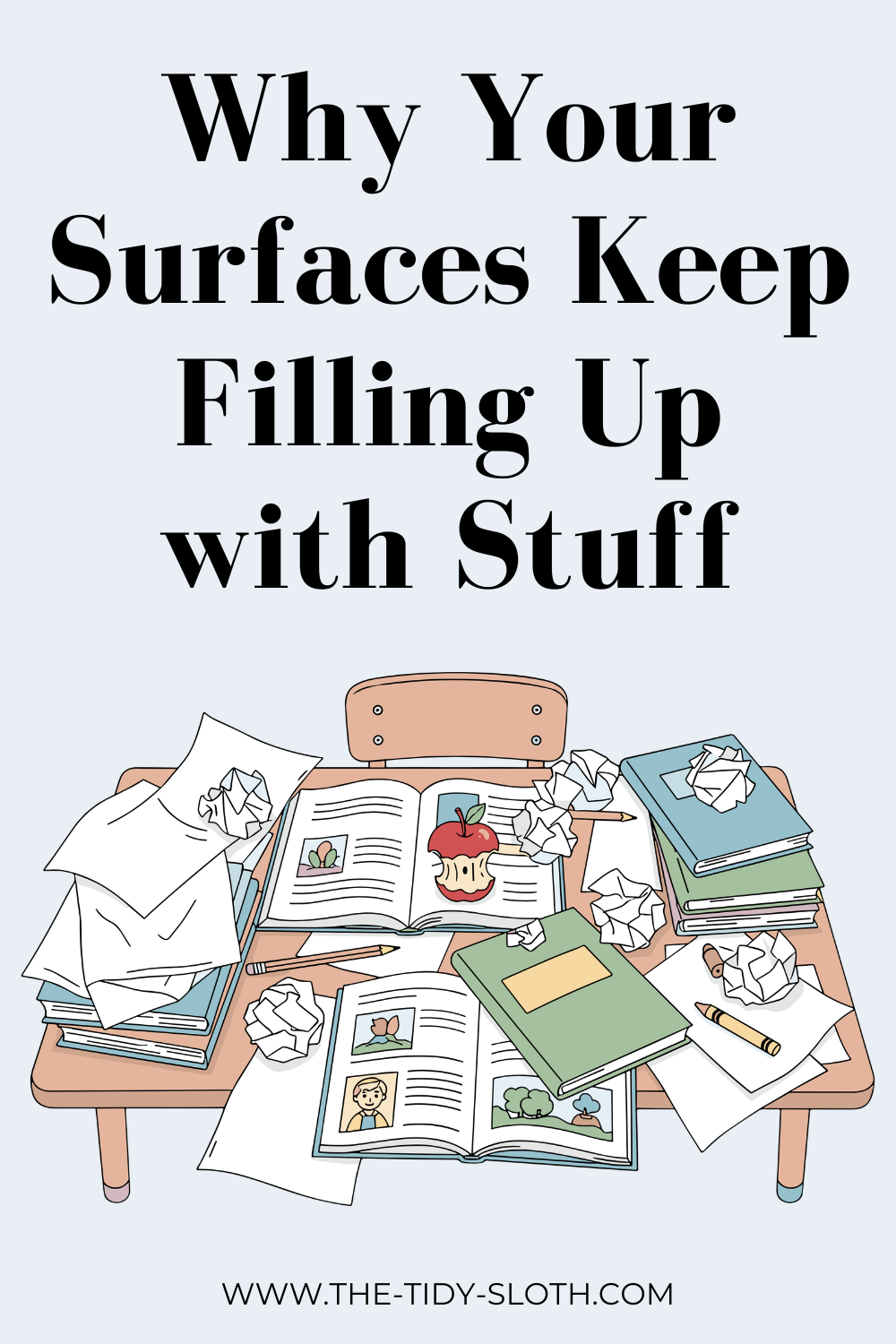
The Flat Surface Clutter Rule explains one of life's great mysteries: why you can clear a surface in the morning and somehow find it covered in random clutter by teatime.
Seriously, where does it all come from?
A letter gets dropped on the kitchen counter. A shopping bag lands on the dining table. A charger appears on the coffee table. Then another item joins it. Then another. Before you know it, you've got a clutter pile that seems to have formed all by itself.
The truth is that clutter loves flat surfaces. They are convenient, visible, and easy to use as temporary storage. The problem is that "temporary" often turns into permanent.
That's where the Flat Surface Clutter Rule comes in. It's a simple way to spot clutter before it becomes overwhelming. Rather than waiting until piles have taken over your home, you learn to catch them early and stop them growing.
In this post, we'll look at the biggest clutter magnets in your home, why flat surfaces attract so much stuff, and how you can stop piles before they start.
What Is the Flat Surface Clutter Rule?
The Flat Surface Clutter Rule is simple:
The clearer a surface is, the easier it is to keep clutter under control.
When a flat surface starts collecting random items, it's often a sign that decisions are being delayed.
A letter hasn't been dealt with.
A bag hasn't been unpacked.
A charger hasn't been put away.
One item becomes two.
Two become ten.
Before long, the surface becomes another storage area.
This is one of the most effective rules for decluttering because it focuses on prevention rather than cleanup. Instead of constantly clearing clutter, you're stopping it from building in the first place.
9 Flat Surfaces That Attract Clutter Like a Magnet
1. The Kitchen Counter
The kitchen counter is probably the biggest clutter hotspot in most homes.
It attracts:
- Post
- Shopping bags
- Water bottles
- Keys
- Random household items
Because it's centrally located, everything seems to end up there.
Unfortunately, cluttered counters make kitchens feel smaller, busier, and harder to clean.
2. The Dining Table
Many dining tables stop being dining tables altogether.
Instead, they become:
- Paperwork stations
- Laundry sorting zones
- Storage areas for things that don't belong anywhere else
The trouble is that once clutter settles on a dining table, it tends to stay there.
Every item becomes part of a growing pile that feels too annoying to deal with later.
3. The Coffee Table
Coffee tables often become clutter magnets because they're right in front of us.
You'll commonly find:
- Magazines
- Remote controls
- Empty mugs
- Post
- Random odds and ends
While a few everyday items are perfectly reasonable, too much visual clutter can make it harder to relax in your living room.
4. The Bedroom Chair
We've all met the famous bedroom chair.
You know the one.
Not clean enough for the wardrobe.
Not dirty enough for the laundry basket.
So it ends up hosting an ever-growing pile of clothes.
Eventually the chair disappears completely.
If this sounds familiar, you're definitely not alone.
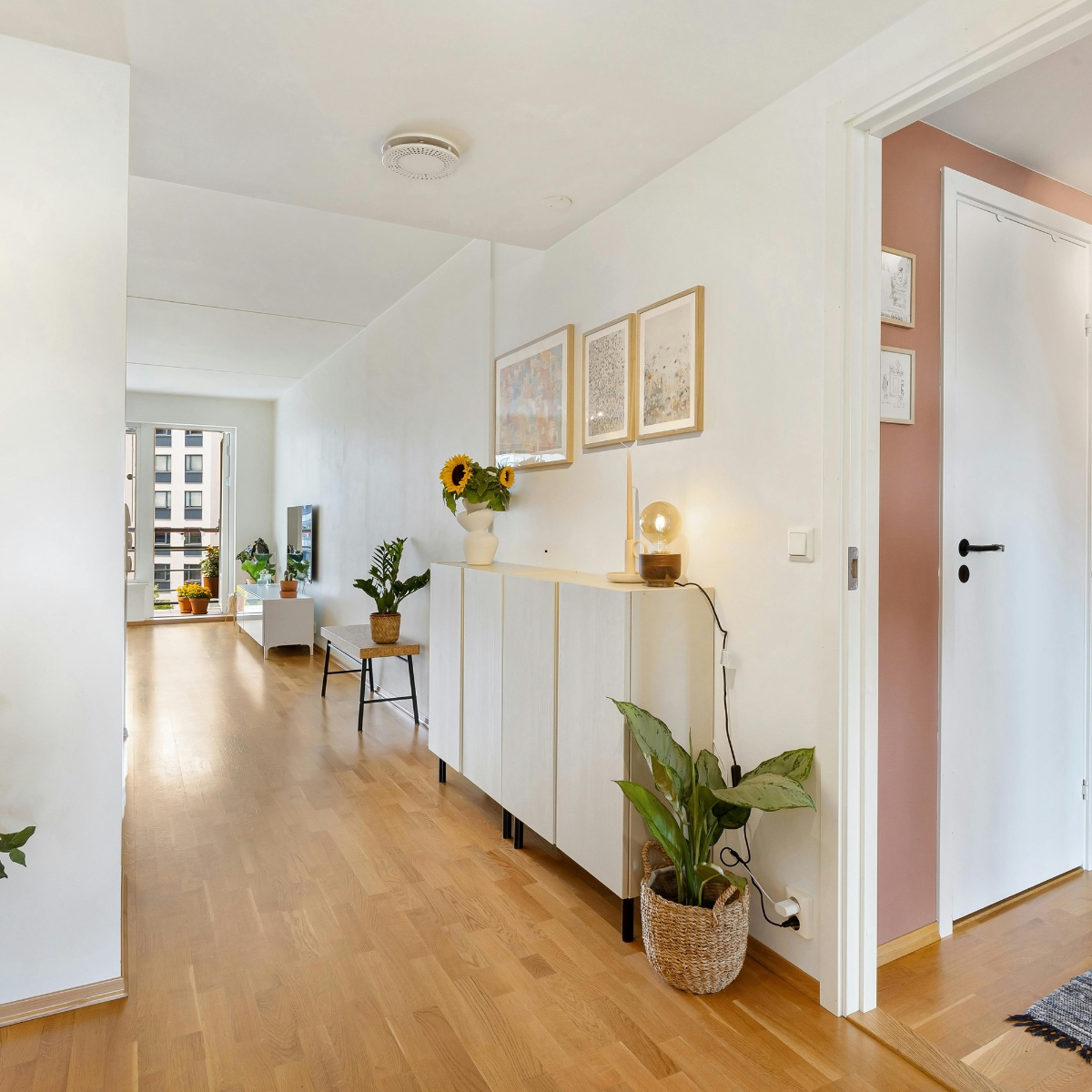
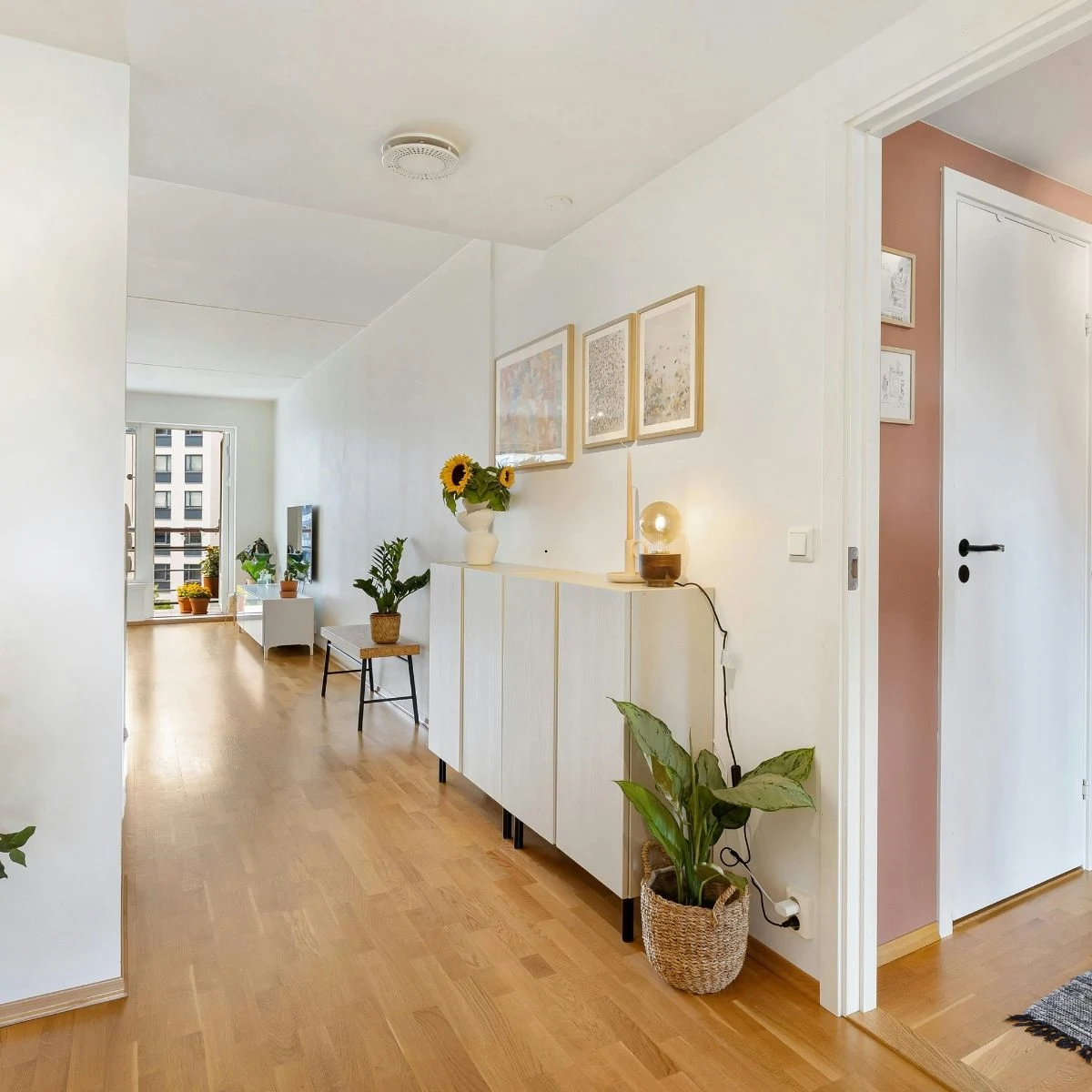
5. The Hallway Console Table
The hallway is often where clutter enters the home.
Keys get dropped.
Receipts get abandoned.
Post gets dumped.
Sunglasses get left behind.
The result is a surface that quickly becomes overwhelmed by everyday items.
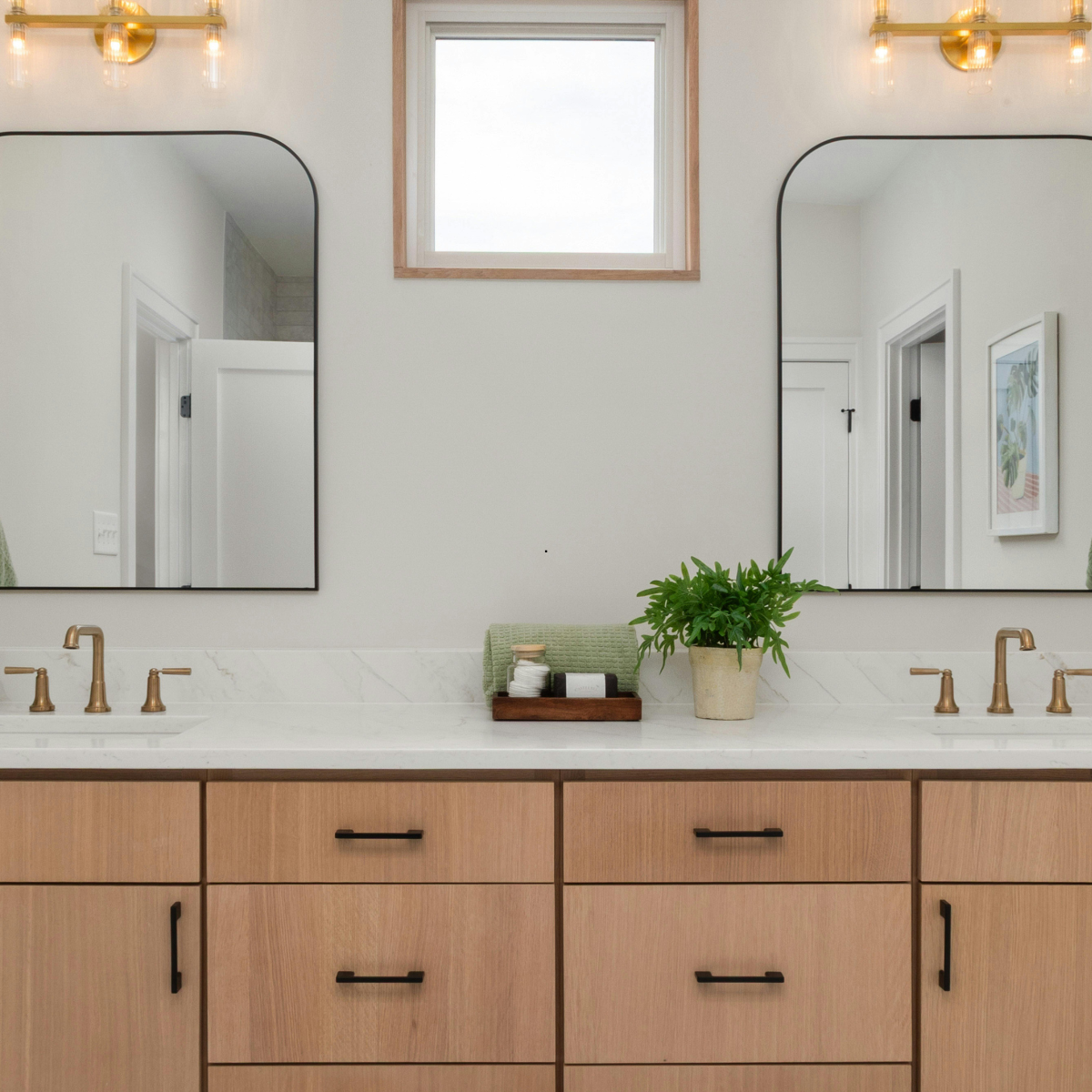
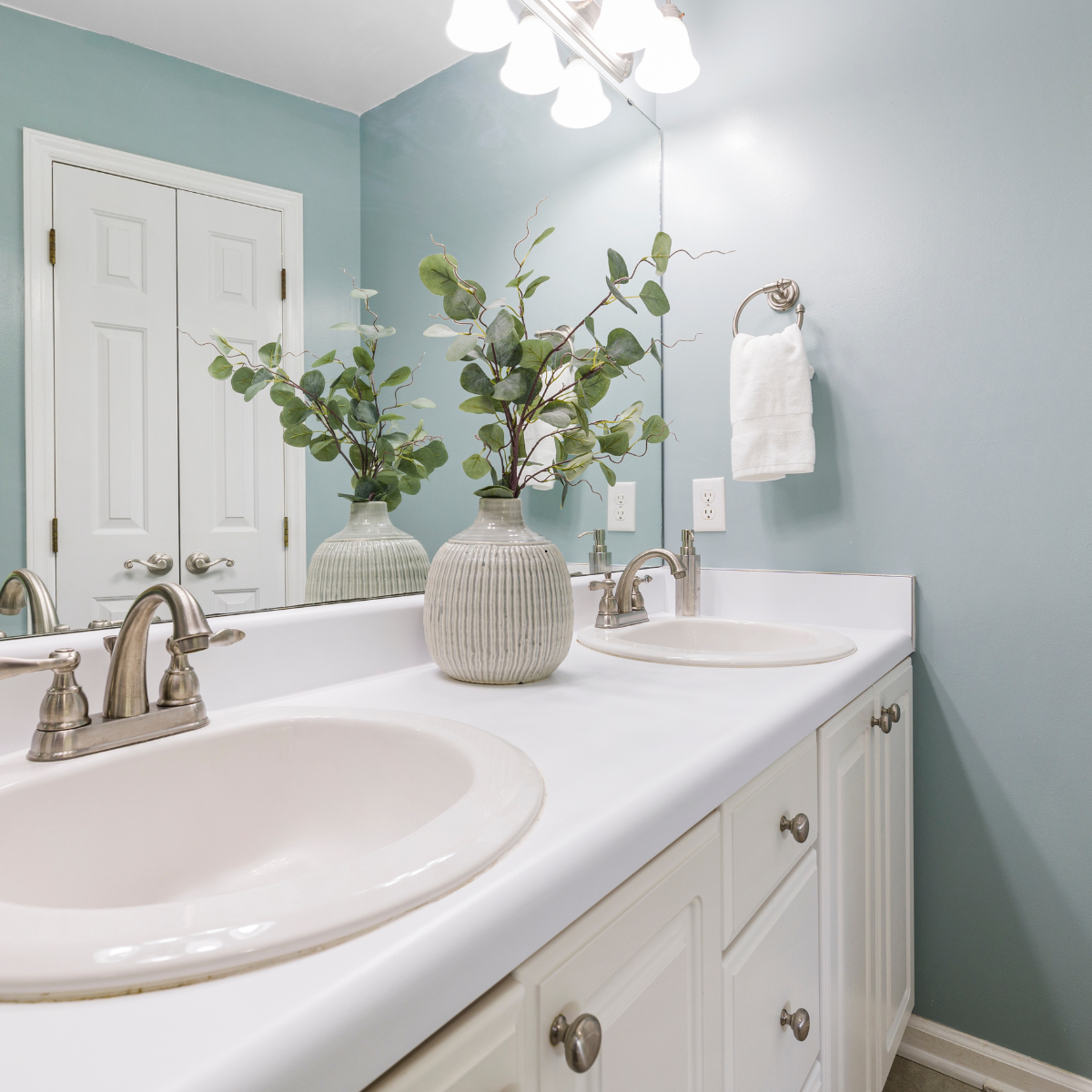
6. Bathroom Counters
Bathroom counters attract clutter because convenience often wins.
Products get left out because we use them regularly.
However, over time those few products become dozens.
Soon the counter feels crowded and difficult to clean.
This is particularly common with:
- Makeup
- Hair products
- Skincare
- Toiletries
7. Desks and Home Office Surfaces
A cluttered workspace often creates a cluttered mind.
Paperwork, stationery, cables, and unfinished projects can quickly take over a desk.
When this happens, productivity tends to suffer because finding things becomes harder.
Many people assume they need better storage. In reality, they often need fewer items sitting on visible surfaces.


8. Tops of Storage Furniture
This one catches people by surprise.
Wardrobes.
Bookcases.
Chest of drawers.
These items already provide storage. Yet somehow their tops often become storage spaces too.
The moment a flat surface appears, clutter sees an opportunity.
That's why many organization rules encourage keeping these areas as clear as possible.
9. Any Empty Surface You Just Cleared
Have you ever noticed that freshly cleared surfaces seem to attract clutter immediately?
It's almost as though the empty space creates a vacuum.
A bag gets placed there.
Then a letter.
Then a random item that doesn't belong anywhere else.
This is one of the biggest signs you need to declutter because it often reveals a deeper problem. The issue isn't the surface itself. The issue is that items don't have proper homes elsewhere.
Why Flat Surfaces Become Clutter Magnets
Understanding why clutter gathers helps you prevent it.
Common reasons include:
Delayed Decisions
Items land on surfaces because we plan to deal with them later.
Lack of Item Homes
If something doesn't have a designated place, it usually ends up on the nearest surface.
Convenience
Putting something down is easier than putting it away.
Clutter Blindness
Over time, we stop noticing growing piles.
This is why The One-Touch Rule: How to Stop Moving Clutter Around Your Home works so well alongside the Flat Surface Clutter Rule. When you deal with items properly the first time, they never get the chance to become piles.
How to Stop Piles Before They Start
The good news is that preventing clutter is often easier than removing it.
Create Limits
Every surface should have a purpose.
Avoid turning every available space into storage.
This works particularly well when combined with The Container Rule: The Decluttering Secret That Stops Clutter Before It Starts, which teaches you to work within physical limits.
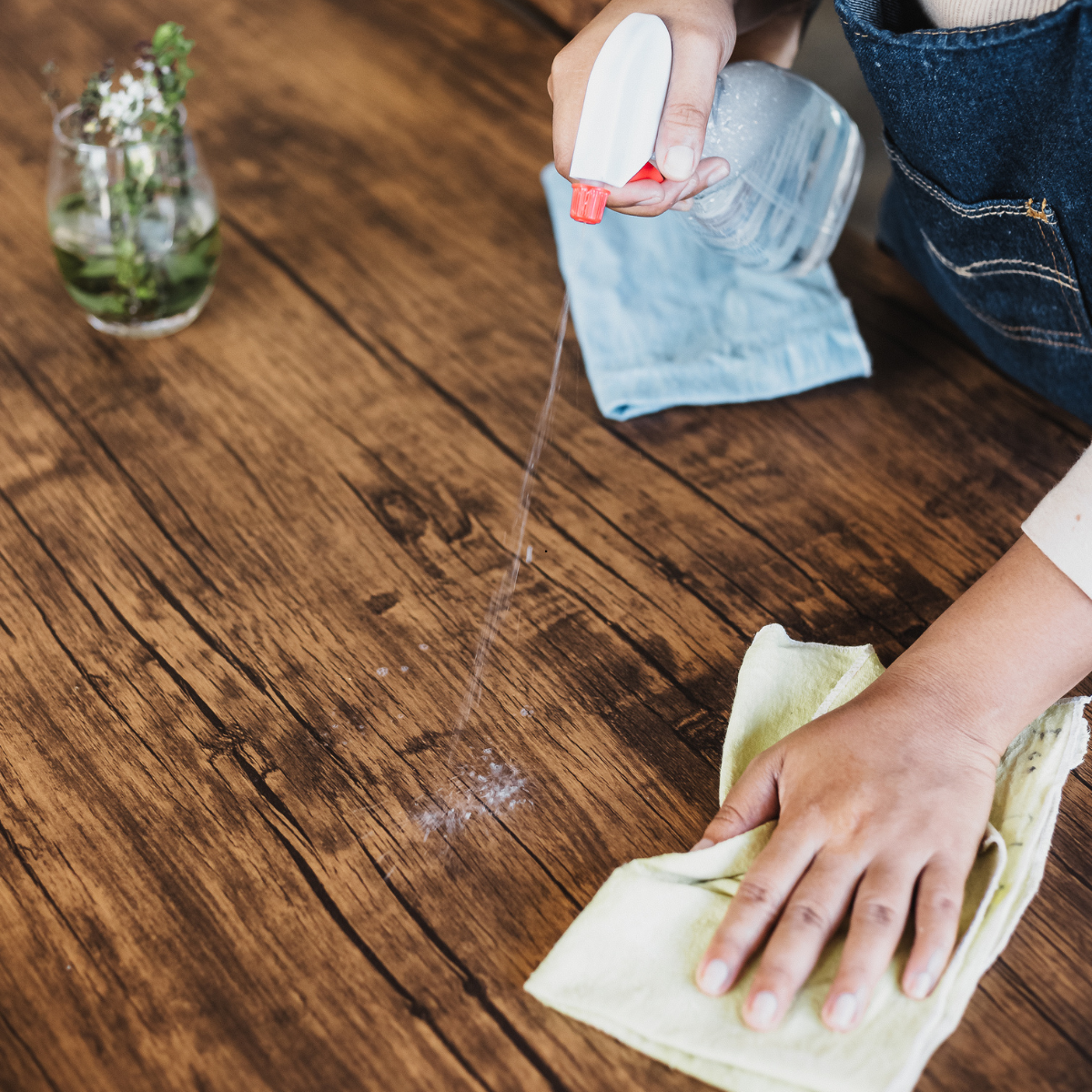
Reset Surfaces Daily
Spend five minutes each evening clearing obvious clutter.
Small actions prevent bigger problems.
Deal With Items Immediately
The sooner you make decisions, the less likely clutter is to accumulate.
Identify Your Clutter Threshold
If every surface is constantly filling up, you may simply have more belongings than your space can comfortably handle.
That's exactly what The Clutter Threshold Rule: How Much Stuff Is Too Much? helps you identify.
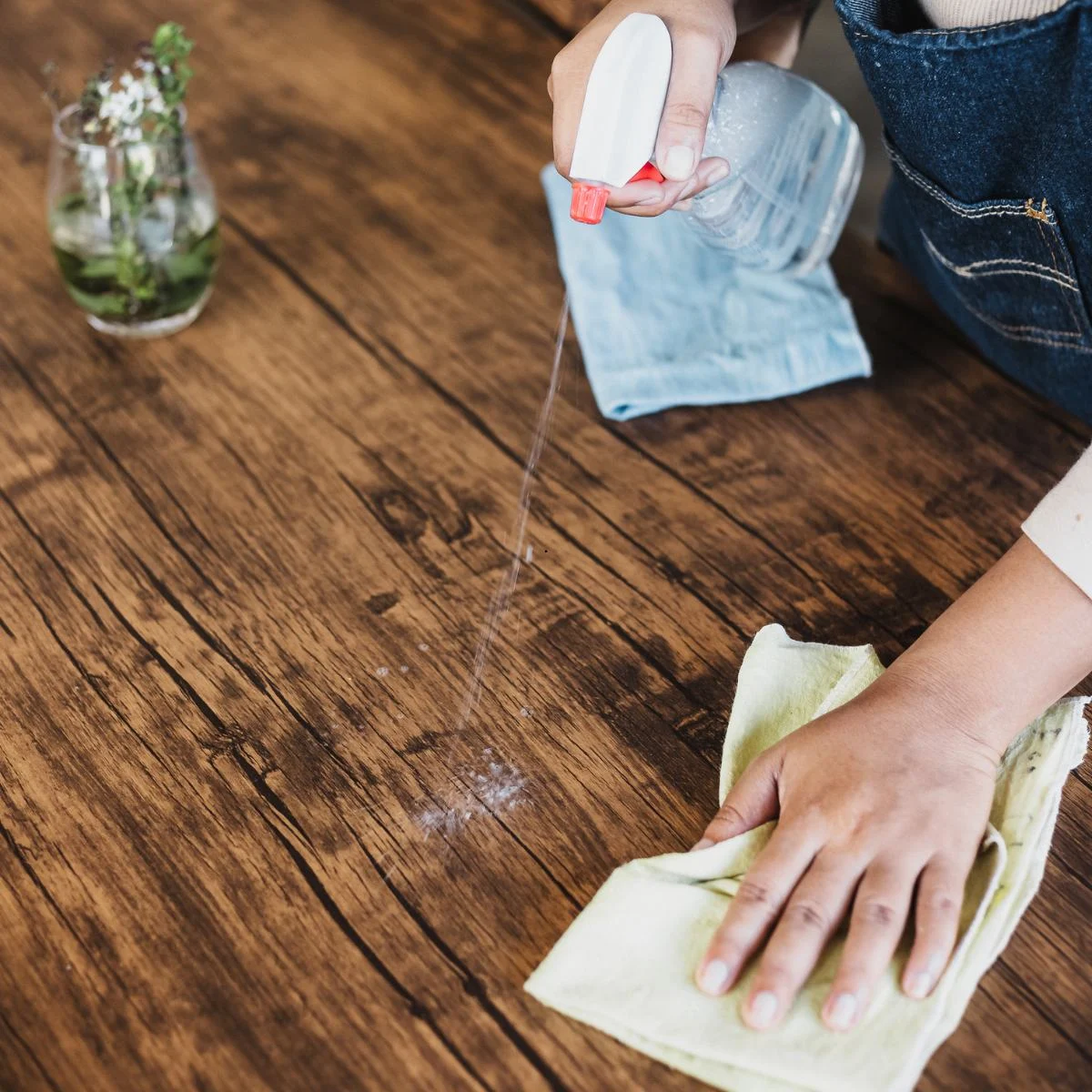
A Flat Surface Reset Challenge
Choose one cluttered surface today.
Then:
- Remove everything.
- Wipe it down.
- Return only essential items.
- Keep it clear for seven days.
That's it.
You'll quickly discover how much calmer a room feels when even one surface stays clutter-free.
Read These Next
- The Container Rule: The Decluttering Secret That Stops Clutter Before It Starts
- The Clutter Threshold Rule: How Much Stuff Is Too Much?
- The One-Touch Rule: How to Stop Moving Clutter Around Your Home
Conclusion
The Flat Surface Clutter Rule is a simple way to stop clutter before it grows into something overwhelming. By paying attention to the surfaces that attract piles, you can spot problem areas early and keep your home feeling calmer, tidier, and easier to maintain.
Next Steps
"Clutter doesn't usually arrive all at once. It arrives one small item at a time."
Read This Next: The One-Touch Rule: How to Stop Moving Clutter Around Your Home
Once you've stopped clutter gathering on surfaces, the next step is learning how to deal with items before they become clutter in the first place.